at261
Ed Cooper
Mutism
Ed Cooper
Featuring: Magnus Granberg Skogen
Available soon
Mutism (2026)
1 The kind of quiet found at the bottom of the stairs 5:53
2 We are like ships in the dark (I fucking hate you) 10:33
3 My bedroom 4:30
4 Mishearing and rotting 6:21
5 On withdrawing 10:48
Played by Tahdig
Manlu Du, violin Amalia Young, viola Ben Finlay, cello
Kristine Healy, flutes Henry McNamara, clarinets
Rob Burton, saxophones Kate Ledger, piano Niki Zohdi, conductor
Recorded by Ed Cooper, March 2026, Clothworkers Concert Hall, Leeds
Mastered by Miles Whittaker
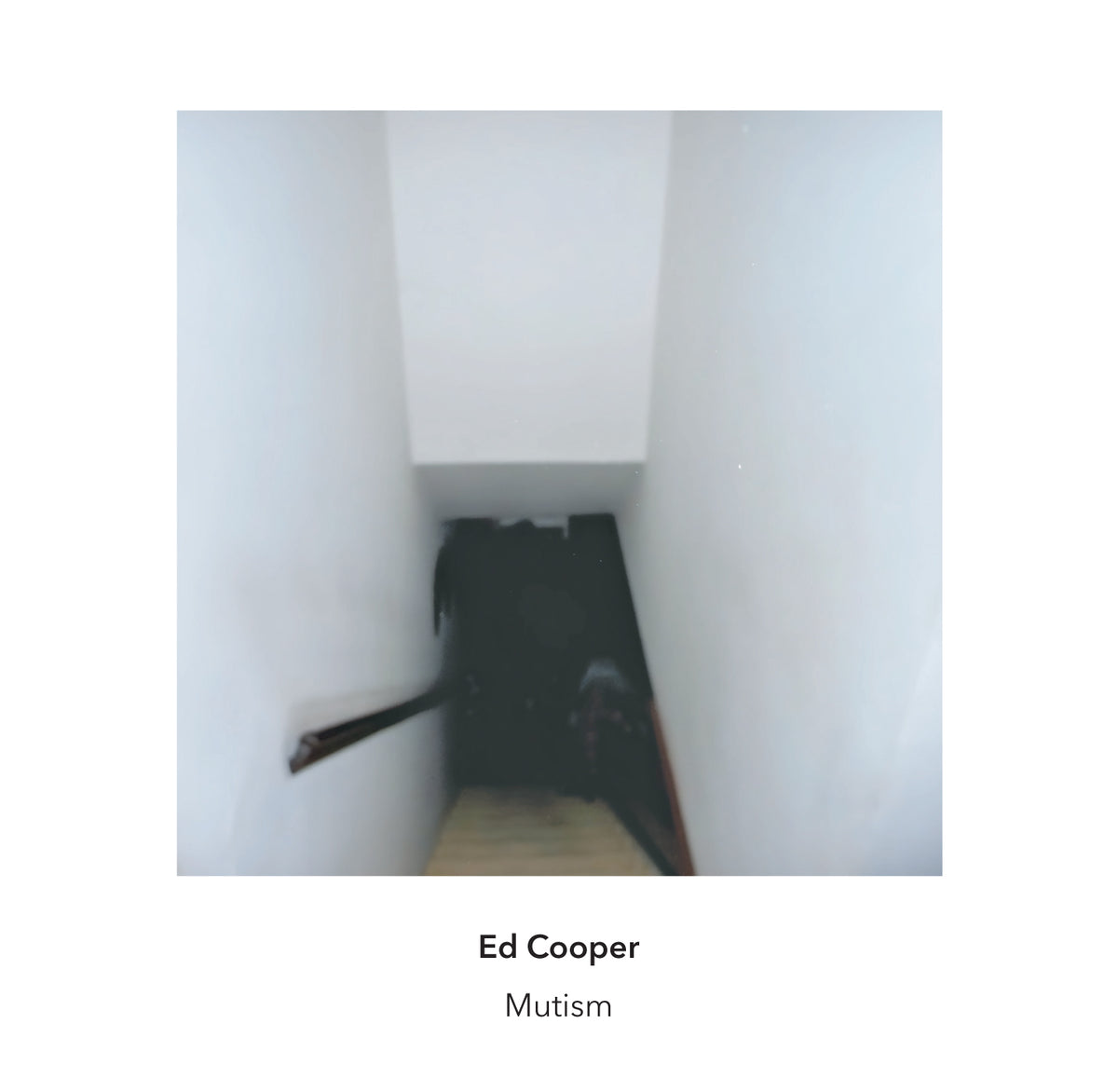
Cover artwork by Ed Cooper

Interview with Ed Cooper
I suspect that you'll be a new name to many people, so can you say something about your background, and how you came to experimental music?
It's quite typical, I'd have thought. In my teens, I played guitar and sang in bands, and sang in choirs (and, briefly, tried to be a solo tenor, though I'm pants at that). I had a bit of an underlying interest in experimental music around that time (and other arts, for what it's worth). I remember listening to Sunn O))) on the way to school and thinking it was mad that my journey was shorter than one of their songs, and hearing a Biffy Clyro track that had sections in 7/4 and 5/4 and thinking that was cool as owt.
To be honest, I can't really get over the approach of music-making that developed in that time. Pretty much all of my composition still starts with me playing guitar in my bedroom. I used to feel awkward about that but I've accepted it now, for better or worse. The teenage approach of total naivety alongside total confidence is the way I'd like to make music, I think.
It was when I got to my undergraduate degree at the University of Leeds that my interests became more mapped onto experimental music. I've got gratitude to the sage that is Scott McLaughlin (or maybe a lot of blame, depending on how you look at it).
Is there anything in particular that you learned from Scott which has proved useful in your early career as a composer?
Lots. But probably the thing that’s stuck with me the most is more of an attitude than compositional approach or techniques. When I first met Scott, I distinctly remember thinking how approachable and nice—normal, even—he was, which is perhaps not quite what I’d imagined experimental composers to be. He shows up and makes things happen, both big and small. I sense that you could have a conversation with him, leave thinking just how kind and warm he is, and have no idea that he is a leading practice researcher and truly wonderful composer.
What did you do after your undergraduate studies at Leeds?
Postgraduate studies at Leeds.
It seems to me that 'Mutism' is in some ways a new departure for your music, but at the same time typical of it in other ways. How do you see it?
I don't think there's a terribly strong thread between my pieces. But I suppose if my recent music is about anything—and I'm not sure that it can be, and much less that I would want it to be—then it's numbness. (I suspect that my music sounds quite different if you know me personally.) But I don't think that maps on to a particular soundworld or collection of techniques—maybe a 'vibe', but I'm not sure. This isn't intentional, mind; it's just the way it comes out, and I'm rather grateful for that. I can't stand it when composers (or artists more generally) basically make the same piece over and over again. I don't think it's beautiful or elegant or humble—I think it's boring and a bit self-indulgent. I like lots of things, all at once. (How could anyone not?) So, yes, I think it is a new departure, but not one that I feel particularly inclined to pursue.
‘Mutism’ is an unusual mixture of different styles. I might describe it as post-modern if I didn’t dislike the term. A lot of its energy comes from juxtaposing varied elements. Is that something you have done before, or particularly enjoy?
As I say, I don’t think that’s particularly deliberate, but thank you. During my PhD, I taught composition at Leeds with Scott and the Id-Meister General, Martin Iddon. Something really useful that they taught me that I still use with my students today is to imagine two canons of musical work—the music that you’ve learned about at school, college, or university, and the music that you like or are engaged with outside of that—and the ways in which they might collide to make music that is, for better or worse, only music that you might make (or like). From there, if you’re willing to indulge what might seem like a silly idea at first, then it’s relatively straightforward to plan some unusual music. So, for example, the second track of Mutism, ‘We are like ships in the dark (I fucking hate you)’, is, to my ears, a meeting of Cocteau Twins and Laure Hiendl, with the title referencing Blackhaine. I suspect that few people like all three of those artists and that there are even fewer who would earnestly entertain trying to make them fit together.
Can you tell us about how the recording came about - and about Tahdig, the new ensemble who played the piece?
Well, you're partly responsible, actually! I sent you some music years ago now and you asked if I had any music without electronics. I didn't, but that's a habit I fell into over the COVID isolations, and it was something I'd been meaning to do.
Tahdig are a new and absolutely dynamite ensemble. Some very dear and sweet loves are members: director and conductor Niki Zohdi, pianist Kate Ledger, and cellist Ben Finlay. The people I hadn't met before who Niki brought in were absolutely excellent—I really couldn't have asked for a better group. The recording and mixing was all extremely smooth. Plus, shout out to Miles Whittaker, who mastered the project. He always does such a great job and it's so beneficial to have someone outside of new/contemporary music circles lend their ears to the project.