at258
Zeynep Toraman
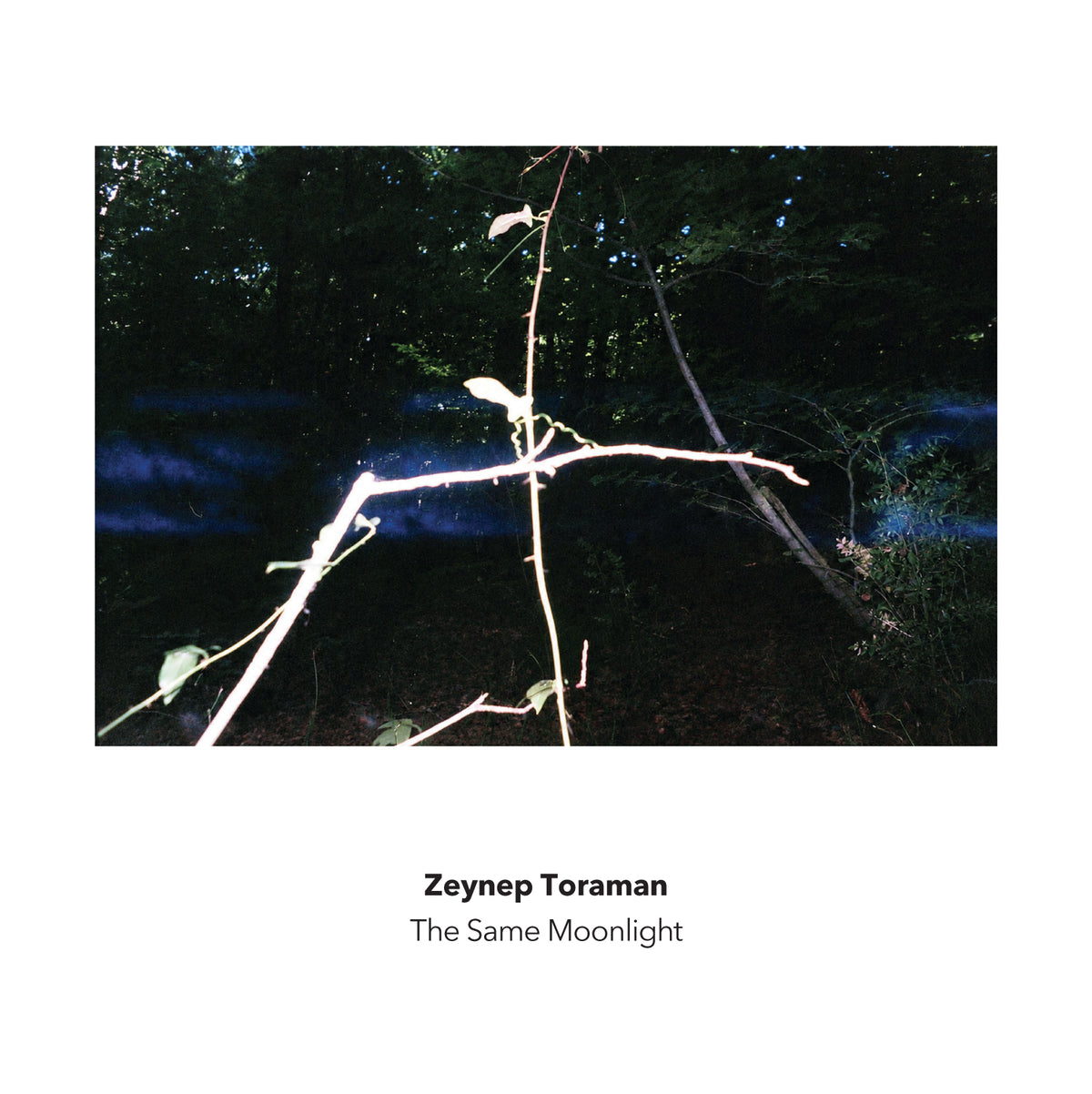
The Same Moonlight
Zeynep Toraman
Featuring: Zeynep Toraman
Available soon
1 The Same Moonlight (2023) 12:29
Ensemble Proton Bern
Susanne Blumenthal (conductor) Bettina Berger (flute)
Martin Bliggenstorfer (oboe) Richard Haynes (clarinet)
Elise Jacoberger (bassoon) Miriam Paschetta (harp)
Coco Samuel Fried (piano) Maximilian Haft (violin) Jan-Filip Tupa (cello)
2 Looks but Glances (2022) 16:06
Ensemble Dedalus & guests
Carlo Sampaolesi (accordion) Amelie Berson (flute)
Phoebe Bognar (bass flute) Paolo Aviles (harp)
Maria Alejandra Jimenez (violin) Thierry Madiot (bass trombone)
Mireia Pellisa Martin (saxophone) Adele Viret (cello)
Felix Lacquement (electric guitar) Paulo Amendoeira (percussion)
3 Long Lurking in the Sky (2025) 16:18
Ensemble Vortex
Rada Hadjikostova (violin) Benoit Morel (viola)
Aurelien Ferrette (cello) Rebecca Minten (bass clarinet)
Interview with Zeynep Toraman

First of all, I know virtually nothing about you, so can you outline where you come from, where you're based, and how you came to experimental music?
I’m from Istanbul and I’ve been based in Berlin for 5 years now. I was based in the US for quite some time before that and I eventually did a PhD in music composition at Harvard, where I also developed a parallel interest in film, visual culture, literature.
My route into experimental music was probably less a single moment than a gradual accumulation of interests. I grew up playing electronic guitar in some rock and metal bands, but I was always interested in the space between different kinds of musical practice, particularly between electronic music, composition, sound, and visual media, especially film. Studying computer science also made me very comfortable with thinking about music as something that could involve systems, processes, and technologies, with technology being only a means to an end.
I feel no commitment to any genre particularly. Over the few years, though, my practice has become much more porous. I’ve become increasingly interested in recorded sound, synthesizers, voice, field recordings, and the more experimental and ambient music scenes. I think I’m less interested now in maintaining a distinction between “composition” and other kinds of music-making. A lot of what I’m doing is really about listening and about constructing particular sonic environments, whether that happens through an ensemble, electronics, or a much more intimate recording setup.
The three pieces on the CD are all played by different ensembles. Were they all commissions from the ensembles? Can you tell us a little about the circumstances underlying each piece?
They come from slightly different circumstances, although they are all connected to the period when I was working very intensively with ensembles and electronics.
The Same Moonlight was commissioned by Ensemble Proton and premiered by them in 2023. The starting point for the piece was Beethoven’s Intermezzo from the Piano Sonata Op. 101, but I was interested less in making an arrangement or quotation than in treating a particular moment in the piece - namely the return of the exposition in the middle of the piece, this tender authorial moment is creates - The title also comes from this idea of recurrence, loosely quoting Nietzsche via Yuk Hui: the “same” moonlight appearing in completely different contexts, in memory, in literature, as a romantic rendering on the constructed loops of the piece.
Looks but Glances, I wrote for this joint project between GMEA in Albi and Ensemble Dedalus called Experiences in 2022. That piece is for ensemble and electronics, and I was thinking quite a lot about perception and the instability of what we think we're hearing. The electronics allowed me to create another layer of instrumental memory, so that sounds could seem to come from somewhere outside the ensemble, or could become difficult to distinguish from the live instruments. In the end I also made an entirely electronic version of this piece, which eventually became the soundtrack of Burak Çevik’s film Form of Forgetting, which relates to this endless translation idea/method that I like to work with.
That’s interesting. So the pieces of yours which I’ve latched on to are just one aspect of your work, which is evidently far more varied than I realised. I suppose that as a listener I focus on a pretty narrow range of music which coincides with my particular tastes. But as a composer and performer, do you find that having a wider focus is beneficial to your creativity?
I think having a wider focus is certainly beneficial to my creativity, although I don't necessarily experience these different aspects of my work as entirely separate. I tend to return to the same questions and musical ideas, but approach them through different materials and ways of working. This is the reason why I like to give repeating or only slightly varying titles to some of my pieces. Sometimes an idea that emerges while working with electronics or my own voice finds its way into an instrumental piece, or vice versa. I translate from chamber music to electronics and back to acoustic music endlessly. I think of translation itself as a creative act. Moving between these different practices also allows me to maintain a certain distance from the conventions of any one of them, which I find quite liberating. In that sense, the variety is perhaps less about pursuing different musical identities than about finding different ways of exploring the same interests. These questions also find their way into texts, which is why, for instance, I often enjoy publishing experimental essays alongside my works. I'm drawn to hidden things, strange languages, and forms of meaning that don't immediately reveal themselves, not out of any academic desire to impose obscurity, but because I think hidden things always yield more, and that this is an important part of how we make meaning as human beings.
Were all three pieces scored very precisely, or is there scope in any of them for the musicians to shape or change the music in performance?
How do you find living and working in Berlin? I hear both positive and negative things about it from many of the musicians I know who are – or were - based there? Do you envisage staying there for a long time?
Concert recordings by Joel Cormier (The Same Moonlight), Benjamin Maumus (Looks but Glances) and Daniel Zea (Long Lurking in the Sky). Mastering by Murat Colak.
Cover Artwork by Nazlı Cengiz, with thanks