Another Timbre TimHarrisonbre
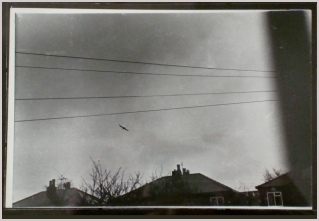
Interview with Anett Németh
“Using chance procedures is great because it establishes connections between different elements that you would never think of otherwise.”
Could you explain the title ‘A Pauper’s Guide to John Cage’?
- I admire Cage as both a thinker and a composer. He’s a starting point for a lot of what I do musically. In this piece I took a couple of concepts from him, in particular the use of chance procedures to determine ‘time brackets’ for the distribution of sounds across the piece. This is obviously similar to what Cage was doing in his late ‘number pieces’, though I should make clear that this didn’t apply to the piano part. That was the first track laid down, and is like a spine for the composition. I recorded on a friend’s piano, more or less improvising round a restricted range of intervals and pitches. The other elements in the piece were then constructed around the piano part using the chance-derived time brackets. Using chance procedures is great because It establishes connections between different elements that you would never think of otherwise. Somewhere in writing about the early days of indeterminacy, Cage reports the young Christian Wolff as saying that once you combine any two sounds together, after a few listens they sound like they belong together, however incongruously different they are. I think that’s true, and the juxtapositions that the timings threw up often came to feel right in themselves, though I did allow myself some flexibility with the time brackets so that I could work some of the more difficult connections and assist their ‘belonging together’. Also I treated some of the sounds electronically – though not the piano track, which remains ‘pure’ throughout. Plus of course I chose the particular sounds I was using in the first place - which Cage usually did too – so the chance procedures were applied within a given sonic framework.
At some level I’m sure my choice of sounds was also influenced by Cage’s music: a combination of traditional instruments (piano and clarinet), mixed with sounds produced by a variety of everyday ‘non-musical’ objects, plus field recordings, and some very simple electronics - either sine tones or treatments of the other recordings. Overall the whole process had a clarity and simplicity – and it’s above all an appreciation of those qualities that I feel I have learnt from reading and listening to Cage. It took me a long time to realise that you don’t have to compose with complex schemas or use expensive equipment; often the simplest solution is the best. So, for example, for this piece apart from the piano, I used objects that were lying round my home as the sound sources, and the field recordings were made literally metres from the house where I was living. You don’t have to travel to exotic locations to gather material for a composition; use what’s around you, and is available for free. The title reflects the fact that the means for producing this music were so simple and meagre: A Pauper’s Guide to John Cage.
“Music as part of the regular flow of everyday life rather than being something apart from or opposed to it, or something you place on a pedestal.”
Thinking of the field recordings you use, which – as you suggest – consist of extremely ‘ordinary’ sounds, is there also a connection with Cage in wanting music to engage with the everyday?
- Yes, undoubtedly: music as part of the regular flow of everyday life rather than being something apart from or opposed to it, or something you place on a pedestal. That has a political dimension as well, of course, though I won’t go into that now. But at the same time for me there’s also an interest in using elements from the everyday in ways which suggests other levels of existence, or something otherworldly. This is hard to articulate because you end up sounding romantic or mystical – and I don’t want to go there at all. But the skill is to touch or illuminate something particular or beautiful that dwells unnoticed in the folds of the everyday. So, for instance, if you simply play back a field recording made on a city street it quickly becomes boring, but for me composing is partly about struggling with that sort of mundane material, moulding it, adding to it, working it to make suggestions and intimations of other things, but without losing the grounding in the everyday sonic world. That’s what I’d like to be able to do.
What about ‘Early Morning Melancholia’: does that use Cageian elements or techniques too?
- Not really, no. Although superficially the two pieces may sound similar, in other ways Melancholia is very different from A Pauper’s Guide. As the title suggests, I wanted to explicitly engage with emotion in Early Morning Melancholia, which is actually a very un-Cageian thing to do. I wanted to compose a piece which addressed the way in which some negative emotions work. For example, mourning or depression are often experienced as overwhelmingly powerful emotions, but simultaneously and paradoxicallythey also induce a kind of numbness, as if you’re feeling everything at three steps removed, through a thick fog. The piece tried to address that duality: representing the deep force of an emotion while also at the same time holding it at a distance.
To my ears the piece has a dream-like quality, which is beautiful and actually quite uplifting.
- Well for me it’s above all sad music, but I can see that that sense of numbness may sound dream-like - though in an odd way because the emotions that the piece is dealing with are typically experienced in the insomniac hours, precisely when you’re not asleep and dreaming. So it’s a weird, half-waking kind of ‘dream’. But I feel uneasy talking like this. All that I’ve said about wanting the piece to deal with a particular emotional experience was my starting point, but once you begin building the work it takes on a momentum of its own, and usually moves away from what you originally intended. In the end I think the music has to stand or fall on its own merits, and whatever I felt I was doing when composing it is irrelevant. You shouldn’t need a preface or a programme note to explain a piece of music, and if what a listener takes
from a composition is completely different from the composer’s intentions, that’s fine. I nearly called it ‘Composition #14’ to avoid having to explain anything or engage in this kind of discussion, and perhaps I should have….
“Musically I’m completely self-taught, I don’t earn any money from music, and I’m stubbornly determined to stay as far away from institutions as possible.”
Your music reminds me of some of the Wandelweiser composers, Michael Pisaro in particular. Are there links or influences there too?
- I don’t know about influences. I’m not connected with the Wandelweiser collective, and wouldn’t want to be part of any group of composers. Musically I’m completely self-taught, I don’t earn any money from music, and I’m stubbornly determined to stay as far away from institutions as possible. But perhaps that’s something I do have in common with some of the Wandelweiser composers. They generally exist outside the academic world of New Music, which is a good thing because that’s usually so deadening. And then there’s certainly a sense of clarity, of paring things back to the bare essentials in a lot of Wandelweiser music that I think is interesting. It relates back to Cage, of course, who is a major influence for them as well. They probably take that further than I do, and perhaps I could learn from that. But then I don’t want to imitate what anyone else is doing; I think I should just keep on with whatever feels interesting to me.
Reviews
“Now, before I get pulled up for writing reviews of CDs I might be connected to- let me explain what happened with tonight’s CD. A few months back, Simon Reynell of the Another Timbre label sent me a disc blind, as he has done before from time to time, to ask my opinion on it. The Cdr contained the two pieces of music by a composer/musician I had not heard of before, Anett Németh, though when I received the disc I didn’t know who had produced the music. I liked it a lot immediately, and tried to encourage Simon to release it, which he did, but as this was to be a release by an otherwise unheard of name he asked myself and the composer Michael Pisaro to write a few lines on it in advance that could be used to help advertise the release. So, yes, my words appear in the press release for this one, but they do so to help push a CD that I just really liked and wanted to see reach a wider audience. The line of mine that Simon used is as follows:
“If anything, this is as perfect a CD to fit my natural, unthinking tastes as could be found. It is very very beautiful indeed.”
and that in many ways sums up this release for me. It is a disc containing two pieces, the first named A Pauper’s Guide to John Cage, and the second Early Morning Melancholia. Both tracks are quiet, brooding works, the first made up of combinations of sparsely played instrumentation, (piano and clarinet) field recordings and domestic electronics, the second similar but without any conventional instruments. When I first heard the music I immediately thought of the work of Michael Pisaro. While I didn’t think the recordings were his, there are a number of similar traits in there, the slowly unfolding of field recordings behind gently played instruments, the use of sidetone-like elements and an overwhelming sense of sad, forlorn beauty. The resulting release, a Cdr on the Another Timbre Byways sublabel also carries eight lines from a poem on the rear of the sleeve, a feature also not unlike Pisaro’s work.
It would be wrong to say that this album is in direct debt to Pisaro’s composition however, and in a short interview at the AT website, Németh seeks to distance herself from any direct influence from his work, along with the other Wandelweiser composers, so I suspect that this music developed at a parallel to it all in some way, but the similarities are impossible to ignore. The sheer melancholic beauty of these pieces, and in particular the aptly titled Early Morning Melancholia is, to me at least, incredibly enticing. There is a colourless, muted feel to them, a music that sounds not unlike the sun trying to break through a morning mist might metaphorically sound, an intense sensation of slowness, of hands pressing down on shoulders, the need to sink down into a bed and be enveloped somehow…
For me, this disc is just very beautiful, a near spotless balance of the recognisable and the abstract. As music goes, it isn’t a challenge, it doesn’t make you think as such, there are no great concepts to get your head around, no sudden surprises sprung, but it is instead achingly gorgeous, if perhaps from a somewhat mournful, bleak perspective. For those readers that know my taste in music, this would indeed provide a natural fit with it. As simply beautiful a CD as I have heard in a while, and a fantastic start for a new name.”
Richard Pinnell, The Watchful Ear
“Pour finir cette dernière série another timbre consacrée à l'influence de John Cage et du collectif Wandelweiser sur différents musiciens plutôt nouveaux, ce CDr rassemble deux pièces d'une jeune compositrice autodidacte dont je n'avais encore jamais entendu parler, Anett Németh. Malheureusement, je n'ai trouvé aucune information concernant cette prometteuse musicienne, hormis une interview sur le site d'another timbre.
La première pièce, écrite en 2010 est une œuvre pour piano, clarinette, objets ménagers, field-recordings et électronique. Durant A pauper's guide to John Cage donc, directement inspirée par l’œuvre de Cage, Németh utilise un nombre restreint de notes ou d'accords sur le piano, auxquels sont associés certains paramètres tels qu'une intensité précise, un certain type de résonance, etc. Ces différentes interventions répétées sont aléatoires et parsèment la pièce de manière sporadique. Autour d'elles s'articulent d'autres matériaux sonores comme les field-recordings, la clarinette, des instruments ou d'autres sources sonores modifiés plutôt simplement, ainsi que quelques fréquences sinusoïdales. Une pièce très aérée où les différents types de sources sonores s'équilibrent, dialoguent de manière narrative, et où le piano, central, acquiert au fil du temps une puissance lyrique et émotive de plus en plus intense. L'espace sonore est traité avec une attention particulière et une maîtrise surprenante, les jeux d'intensités et de silences forment une architecture sonique singulière, contrastée et équilibrée. Une construction espacée et poétique, où le lyrisme est teinté de délicatesse et de sensibilité, au son comme à l'espace.
La seconde pièce, Early morning melancholia, n'utilise plus d'instruments, mais uniquement des field-recordings et de l'électronique rudimentaires, censés décrire une mélancolie matinale comme son nom l'indique. Plus linéaire et moins contrastée, cette superposition de nappes lisses et continues effleure de près la pesanteur et la gravité de la sensation de mélancolie que l'on peut ressentir suite à une nuit d'insomnie par exemple. Une pièce très calme, presque contemplative, qui a perdu du lyrisme de la pièce précédente pour accéder à l'essence même de l'émotion envisagée, avec son angoissante sérénité et sa triste assurance. Juxtaposition de nappes sonores déjà entendues peut-être, mais rarement dans cette perspective figurative, car Némett tente bel et bien de peindre une émotion par des procédés musicaux nouveaux, mais selon un vieille philosophie romantique qui consiste à associer la musique à un flux d'émotions. Tradition et modernité se croise dans cette musique originale d'une compositrice extérieure à tout mouvement artistique (cf. l'interview publiée sur le site d'another timbre toujours). Si Némett ne s'intéresse plus vraiment à l'agencement sonore de l'espace, elle réussit néanmoins à pleinement déployer les propriétés émotionnelles de sons pourtant communs et rudimentaires.
A pauper's guide to John Cage rassemble donc deux œuvres différentes mais aussi belles et intenses l'une que l'autre, malgré certains aspects parfois abstraits, linéaires ou minimalistes. Une musique toujours profonde et chaleureuse, sensible et émotionnelle, qui croise différentes approches compositionnelles et esthétiques. Différentes démarches qui, à leurs points de jonction et d'interaction, forment une musique puissamment lyrique et profondément riche. Deux pièces vraiment belles, intelligentes et singulières en somme, recommandé!”
Julien Heraud, Improv-Sphere
“I know nothing about Nemeth, and thus have lazily reached for comparative judgement markers almost soon as the music hits my ears. But not too much, I hope, because this sounds very much like its own thing. Michael Pisaro is, yes, the obvious comparison to make here (at least, on the first track, which gives the disc a whole its title as well): the combination of instrumental/electronic timbres, for one thing – piano (with occasional clarinet) set off against sine tones and field recordings – though those recordings are less prevalent, and the music as a
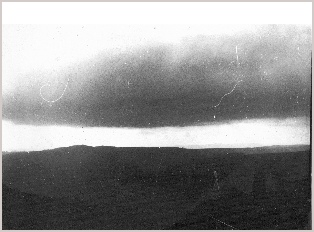
whole more 'busy' than, say, 'Fields Have Ears 4'. 'Busy' is, of course, a relative term (and must come across as absurdly relative to those not immersed in this particular field of music-making); certainly, while there's very little actual silence, there are pauses which feel like interludes between episodes, or breathing points. One in particular, six minutes into the first track, very beautifully isolates a temporary snippet of what sounds like a wailing baby bird – at first I thought a seagull, but it's less harsh than that, plaintive and almost heart-rending here. The piano improvisation itself, which, as Nemeth notes, forms the 'spine' of the piece, is as spare and controlled as one might hope for and expect, alternating between grey-grave middle-register soundings and the occasional inner-string pluck. At times it takes on tolling-bell weight, sombre in a way that, say, Pisaro's 'Asleep, Street, Pipe, Tones', or (more apposite for this piece's soundworld), the aforementioned 'Fields Have Ears 4', are not: this, in part, accounting for the piece's distinctive character; that and the fact that the field recordings are so spectrally murky, as if emerging from that speckled grey cloud which adorns the front cover (the composer-photo/phono-grapher peeking out of her window at the foreboding blankness of suburbia). OK, I'm imposing a programme here, perhaps drawn in by Nemeth's comments on the Another Timbre website, imagining her popping out of her door, furtively, surreptitiously, to gather sounds, the whoosh of the road and the occasional call of a circling bird and the frenzied Neighbourhood Watch glare, the curtain-tugging neighbourhood stare, looking out for suspicious artistic activity. Yet there are bits which open up to some other suggestions– little folds in the space-time continuum through which appear, now that I've got that image in my mind, reminiscences of some grey summer seaside (these images are all very British, I realize – and, of course, I don't know where Nemeth lives), like the prompting of Proust's madeleine cakes, or the smell of salt brought in by a sea-gull.
But this is sound, of course, so the squeaking and scraping turns from gull to skateboard to rusty wheel or gate, the piano is plunked with unexpected and reverberating force (still a single tone), sounds swirl in and out behind it, the music continues, non-development but full of ambiguous incident. I guess, then, that it's quite a busy piece, in fact, in terms and in the turns of all the various sound-producing methods and little episodes which have gone into making it: actual and processed clarinet, objects inside and outside the household, electronic manipulations. And I do really like that domestic element stressed in Nemeth's brief notes and in the Another Timbre interview: John Cage on the cheap, as it were, though, perhaps, with less of the almost religious solemnity that might go into Official Concert Performances of his work in certain circumstances.
'Early Morning Melancholia' is quite a different animal to the Pauper's Guide, is wails tamed and neutralized, as Nemeth notes: the simultaneous feeling of absolute despair and total numbness that particular kinds of depression can induce. I mean, it's beautiful, again, too, much more sparse than its longer cousin, less explicitly referential in its samplings, which are disguised by simple twists of electronic manipulation – slowed down, pasted over with white noise, woozily slurring and sliming in and out of an overall trajectory that's meandering and unclear, repetitive and agonizingly slow, without the anchoring Pauper's piano to tie it down. Maybe I've emotionally over-invested there – and maybe I should have read Nemeth's interview after listening to her pieces
(after all, Reynell notes in one of his questions that, for him, the piece's “dream-like” quality is “beautiful and actually quite up-lifting”) –but, as with Ap'strophe's 'Corgroc' (reviewed in the previous issue of eartrip), there seems to me here a definite emotional element -as there is, indeed, in much of the best 'eai' – that's not easy or comforting but difficult and sometimes overwhelming. Yet so easy for those very same elements which make up such work – sine tones and held drones, electronic noises and slow-motion movement, an overarching structure which makes use of overlapping, repetitive, non-developmental near-stasis in a quasi-intuitive manner –
to generate music that can seem life-affirming and to sparkle with positive and wholly calming serenity balm (shit, that makes it sound like aural bubble-bath. Badedas for the Ears! But you get the picture, hear, it, watchfully, whatever). And yeah, in sum, this is really very impressive work, and do I hope that we hear more from Nemeth, and, well, Another Timbre Strikes Again.”
David Grundy, eartrip magazine
“This recording grew on me quite a bit over repeated listens, possibly having to do simply with state of mind. What I initially found a bit arid "filled in" very much over time. Two pieces, the title track for piano, clarinet, objects, field recordings and electronic was composed along Cagean lines, using chance procedures to determine elemental aspects, all items save piano treated electronically to some extent. But that piano, sporadic though its contributions are, serves as a supple spine and gives the music--soft but essentially mellifluous--a very attractive, sinuous character, like a small pool of water expanding on irregular ground. The second track is smoother, enjoyable in a post-"Obscure Music" kind of way (it's for "manipulated recordings" and electronics), moving along slowly, the hollow tones oozing amongst the field recordings.
Good job, and add Ms. Németh to the list of people whose work I'll be curious about in the future.”
Brian Olewnick, Just Outside
“Last, and by no means least, comes A Pauper's Guide to John Cage, on the budget Another Timbre Byways imprint, which was originally intended to feature lesser-known musicians. Across its 44 minutes, it features two compositions by Anett Németh played by the composer herself alone on a range of instruments and equipment. The album opens with the brilliantly-named title piece, which has an underlying drone/hum (maybe produced by "domestic electronics") over which Németh plays well-spaced piano chords and single notes which are allowed to resound and linger so that they can be fully appreciated—a characteristic of much Wandelweiser music, although Németh is at pains to deny that association, preferring to stress her admiration for Cage.
"Early Morning Melancholia," the second track, is distinctly different to the first, consisting of layers of rising and falling drones and tones without added instruments, but it is clearly from the same source, creating an emotion-laden atmosphere that is entirely consistent with its title. Whatever Németh's influences, her music achieves an impressive balance between surface and depth; it is initially appealing enough to engage the listener while it reveals ever more with repeated listening. Overall, this album is simply beautiful and beautifully simple. We will be hearing more from Anett Németh.
As a series of releases, "Silence and After 2" is highly commendable, showing Another Timbre to be in excellent shape after its first four years. With a US presidential election looming, this seems appropriate: "Four More Years!"
John Eyles, All About Jazz
“Anett Nemeth’s somewhat curiously titled 'A Pauper's Guide To John Cage' has two pieces, the title piece and 'Early Morning Melancholia'. She plays piano, clarinet, household objects, field recordings and domestic electronics on the first and manipulated recordings and domestic electronics on the second. She says that she is inspired by Cage, using a variety of his concepts, both in using compositional methods - time based - and the use of non musical objects. The title piece is almost like modern classical music, which sounds really good. Small isolated pieces, a fine merging of instruments and acoustic sounds, which all have a lot of tension and played with great care for detail. The second piece is a more electronic music, again layered, but without the sparseness of the previous one. Here too we are treated to fine piece of music, with nice overtones from all sorts of recordings and some meditative scrapings.”
Franz de Waard, Vital Weekly
at-b08 A Pauper’s Guide to John Cage - Anett Németh
1. A Pauper’s Guide to John Cage (2010) 26:51
for piano, clarinet, household objects, field recordings & domestic electronics
2. Early Morning Melancholia (2010) 16:58
for manipulated recordings & domestic electronics
CD copies sold out, but downloads available from Bandcamp here